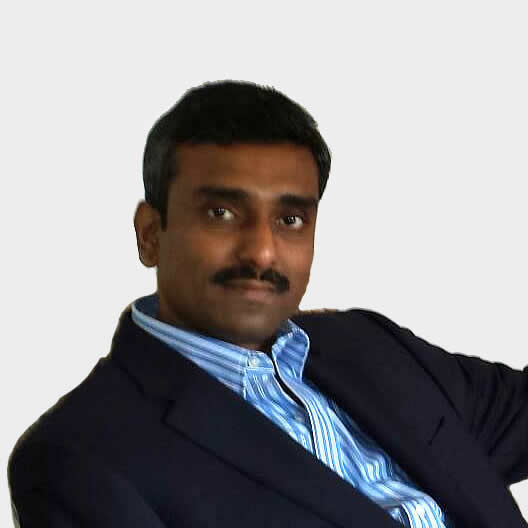
Hi, I’m Ananth. I build production software — and I’ve been at it since 1987.
I’m not just a developer — I’m a production-minded software builder, founder, and trainer. I work across the full delivery surface: business workflows, architecture, AI-era tools, data, delivery, and handoff — the parts that decide whether a system makes it past launch and stays useful.
Software architect, AI systems builder, founder of IntelliFusion Technologies, and educator — turning ideas, prototypes, and AI-era experiments into durable systems businesses can actually run on.
- code
Building software since 1987 Decades of architecture and delivery across automotive, payments, marketplace, content, and enterprise systems.
- school
20+ years of teaching Software delivery, architecture, and AI-era development — for individual learners, teams, and trainers.
- business_center
Founder of IntelliFusion Technologies Founded 2008, based in New Jersey.
- inventory_2
8 production systems shipped Platforms and AI-enabled products across multiple industries — see the portfolio.
Four roles, one through-line
- architectureSoftware architect
- smart_toyAI systems builder
- flagFounder
- schoolEducator
Why I build the way I build
Decades of seeing what happens when software is rushed.
I’ve spent decades watching what happens when software is rushed, under-designed, or disconnected from the business — demos that don’t become products, prototypes that don’t scale, integrations that quietly rot, and AI features bolted onto systems that were never ready to carry them.
The pattern is the same every time: the architecture, data, integrations, and operational concerns weren’t treated as design problems — they were left for “later.” Later usually arrives as a rebuild.
I treat architecture, data, integrations, AI workflows, delivery, and handoff as design problems from the start — not as cleanup work later. Every build I take on covers them together, in regular cadence, with decisions captured live and working software visible along the way.
It’s the same way I work on my own products, on client builds, and inside the companies I’ve helped. The badge on the door changes; the way I work doesn’t.
What I do
Four roles. One through-line.
Architecture-led software delivery, applied four ways — from greenfield builds to teaching the next round of practitioners.
What I bring to a build
Decades of practice across the full delivery surface.
I’m a production-minded software builder, founder, and trainer who works across the parts that decide whether a system makes it past launch and stays useful: business workflows, architecture, AI-era tools, data, delivery, and handoff.
Business workflows
How real work flows through a business, where software lives in the human process, and what users actually need to do their jobs — before any product decision gets made.
Architecture
System shape, module boundaries, technology choices, and scalability and maintainability decisions designed before code — not retrofitted under pressure later.
AI-era tools
Cursor, Claude, ChatGPT, Copilot, agent frameworks, retrieval, and model APIs — used as accelerators inside a real engineering practice, not as substitutes for one.
Data
Sources of truth, integration boundaries, lineage, ownership — and the difference between data a system can run on and data a business can actually trust.
Delivery
Building in reviewable increments, working software in regular cadence, decisions captured live, and progress visible to the people who paid for the build.
Handoff
Production runbooks, paired ops walkthroughs, knowledge transfer as a deliverable, and clean ownership transfer to the team that will run the system day to day.
After decades of doing this work, I wrote down what consistently produced systems businesses could actually run on — that’s the Builder Lab Method.
Read the methodHow I think about software
Four convictions that shape every build.
Software should be architecture-led.
Architecture, data, and integration choices are the cheapest decisions a project ever makes — if they’re made deliberately at the start. Made implicitly in the middle of an implementation, they’re the most expensive.
AI belongs inside systems, not next to them.
The interesting AI work is integration work — with data, workflows, business rules, and human review designed in. A model wrapper is a demo. A system that uses AI well is a product.
Tools don’t replace judgment.
Cursor, Claude, ChatGPT, Copilot — great tools, every one of them, and I use them daily. But the architecture, the requirements thinking, the integration plan, and the operational decisions still need a human in the loop. The method is what holds it together.
Maintainability and production readiness aren’t bonus features.
A system that ships and a system that’s safe to operate, extend, and hand over are two different things. The Builder Lab Method treats the second one as part of the build, not a phase that begins after launch.
The company & the ventures
IntelliFusion Technologies — and the ventures around it.
A software development company in New Jersey, founded in 2008. The platform from which I build, ship, and operate the products that prove the method.
IntelliFusion Technologies
IntelliFusion is a software development company focused on systems, AI, automation, automotive technology, enterprise software, and consulting. It’s where the products in the portfolio live, where client builds happen, and where the Builder Lab Method gets practiced day in and day out.
IntelliFusion is the company I run today, and the platform behind the work on this site. Over the years I’ve also founded other ventures — products and platforms across automotive, marketplace, content, and consumer spaces. Each one taught the method something new.
Background & credentials
Where the work has shown up
Industries served. Audiences taught.
The method has traveled across very different domains — and it’s the same method I teach to the next round of practitioners.
Eight domains, one playbook.
- Automotive
- Financial services
- Ecommerce
- Legal
- Insurance
- Government
- Life sciences & healthcare
- Pharma
The industries differ. The questions don’t: what are the goals, where does the data come from, how do the integrations work, where does AI add real value, and how does a team safely run this in production?
See the portfolioTwenty-plus years teaching how this work actually gets done.
I’ve been teaching software practice for more than two decades — most recently AI-era development. I work with AI tool users, developers, students, career builders, founders, product thinkers, and instructors who want to think, plan, build, and review software like real delivery professionals — beyond tutorials, copied code, and AI output that ignores architecture and the business.
- check_circle For AI tool users moving beyond generated code
- check_circle For graduates & career builders rebuilding in the AI era
- check_circle For developers, founders, analysts & product thinkers
- check_circle For trainers, instructors & university faculty (train-the-trainer)

Let’s build something that lasts
Bring a product idea, a system to modernize, or a team to train.
If you’re building software, integrating AI into existing systems, modernizing a legacy platform, or upskilling a team for AI-era delivery, I’d like to hear about your project.
No pitch decks. No scoping spreadsheets to fill out. The first conversation is a conversation: what you’re trying to build, what’s in the way, and whether the method is the right fit for your situation.